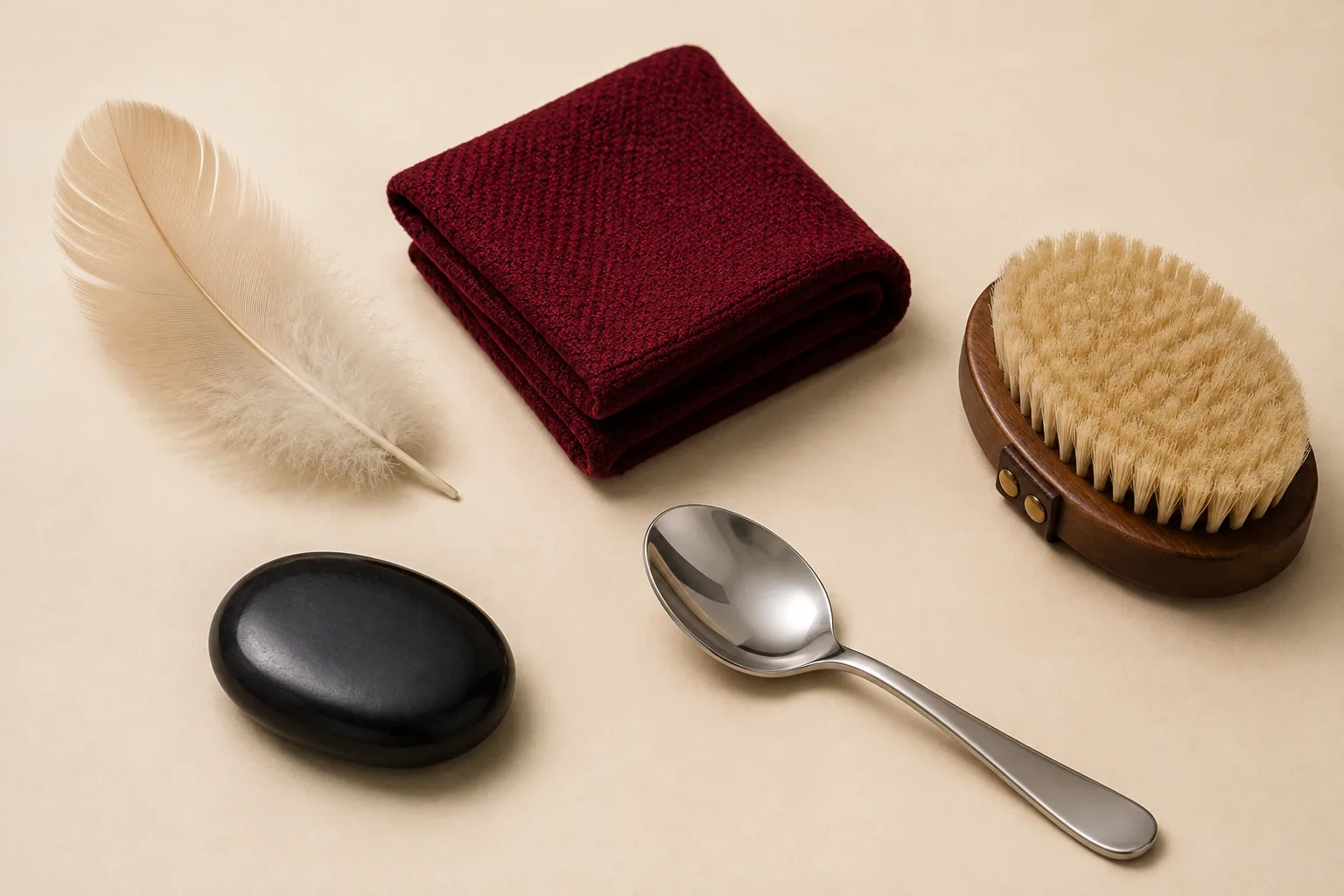
Contrasts such as smooth, soft, rough or patterned surfaces may be the focus.
Back to the glossarySensation & activity
Sensation play
Exploration of contrasting tactile experiences such as softness, pressure, vibration or texture. The term covers a wide spectrum, from gentle touch to intense stimulation, without implying a particular power dynamic.
Sensation & activity
In brief
Texture and attention can be the subject without implying one intensity.
Sensation play is an umbrella term for consensual adult attention to touch and bodily sensation. It may involve gentle, neutral or intense textures and can be playful, calming, erotic or part of power exchange. Because the label is broad, it does not describe intensity, risk or consent by itself, and this page offers examples without teaching techniques.
Different forms of mechanical sensation whose comfort and medical relevance vary by person and device.
Warm or cool sensation with separate burn, cold-injury and material concerns.
May overlap but is not required; sensation play can be entirely gentle or non-painful.
A broad community category
Rehor's survey documents a wide range of sensation-related behaviours among women recruited from kink communities. Systematic and consent reviews likewise show diversity in practices and meanings, but do not provide a representative UK prevalence or one explanation for why adults enjoy particular sensations.
Interest, fantasy, solitary exploration and partnered behaviour are different. A preference for texture does not imply dominance, submission, pain, fetish identity or a clinical condition.
Objects, materials and sensory features
Possible objects include unoccupied fabric swatches, feathers, soft brushes, textured rollers, massage-style devices, smooth stones, patterned gloves or everyday textiles. Surface, sound, weight, movement, pressure and predictability may each matter.
Objects with similar appearances may differ in composition, cleanliness, sharpness, vibration and heat retention. Material labels and manufacturer information are more reliable than assuming an everyday object is suitable for body contact.
Consent, access and skin
Consent should specify the kinds of touch, areas of contact, intensity, devices and permission to change them. Sensory needs, neuropathy, pain conditions, allergies and trauma can alter how contact is felt; a participant's report takes priority over another person's expectation.
NHS guidance notes that contact dermatitis can be triggered by irritants or allergens including soaps, cosmetics, metals and rubber. Redness, pain, numbness, swelling or distress are not achievements to push through.
Clinical distinction and wellbeing
WHO guidance does not classify a consensual adult sensory preference as a disorder merely because it is unconventional. Clinical concern depends on distress, impairment, serious risk or non-consent, and a collection of tactile objects is not diagnostic evidence.
A safeword or signal supplements ordinary withdrawal and attention to wellbeing. Aftercare may be welcome but is optional and cannot substitute for first aid, medical care or accountability when a boundary has been ignored.
Non-graphic examples
What the umbrella may include
- Comparing unoccupied fabric swatches for softness, weave or sound.
- Using a soft brush as an agreed adult sensory object without a power role.
- Choosing predictable, repeated touch because surprise is uncomfortable.
- Using separate permission before introducing a vibrating device or new material.
- Stopping when skin, nerve or emotional symptoms become concerning.
Reviewed 30 August 2026
Keep exploring.
This detailed field note uses the best available evidence without treating one community sample as universal. Evidence limits and UK context are stated where relevant.
Prepared by The UK Kink Guide editorial team. Read the evidence and review methodology.
Found an error or important omission? See how to report a correction.
Explore all 268 entries