Attention to leather's surface, scent, weight, sound, patina or construction.
Back to the glossaryMaterials & dress
Leather fetish
An attraction to leather’s visual, tactile or olfactory qualities, or to the identities and subcultures associated with leather clothing. Leather culture also has distinct social histories, particularly within LGBTQ+ communities.
Materials & dress
In brief
Material attraction and community history overlap—but are not identical.
Leather can be a material focus, a fashion aesthetic, a craft interest, a community identity or several of these at once. Its weight, scent, surface, sound and association with uniforms, motorcycles, workwear or queer leather cultures may carry different meanings. Wearing leather does not by itself identify someone's sexuality, role or consent.
Use of leather in ordinary, punk, motorcycle, uniform-inspired or designer clothing without a kink identity.
Historically developed social cultures, organisations and symbols, especially within LGBTQ+ life, with varied local customs.
Coated textiles and plant- or synthetic-based materials that may reproduce some visual qualities but have different composition and care.
Research, archives and historical context
Scorolli and colleagues' online-group study supports treating clothing and body-associated objects as meaningful fetish categories, while broader BDSM reviews show that material interests can intersect with identity and community. These studies do not make leather a single psychological type.
The Leather Archives & Museum preserves records, garments, art and oral histories from leather, kink and fetish communities. Its collections demonstrate that leather has social and LGBTQ+ histories beyond individual attraction. They are especially strong for North American communities and should not be treated as a complete history of every UK club, gender or generation.
Objects, garments and sensory qualities
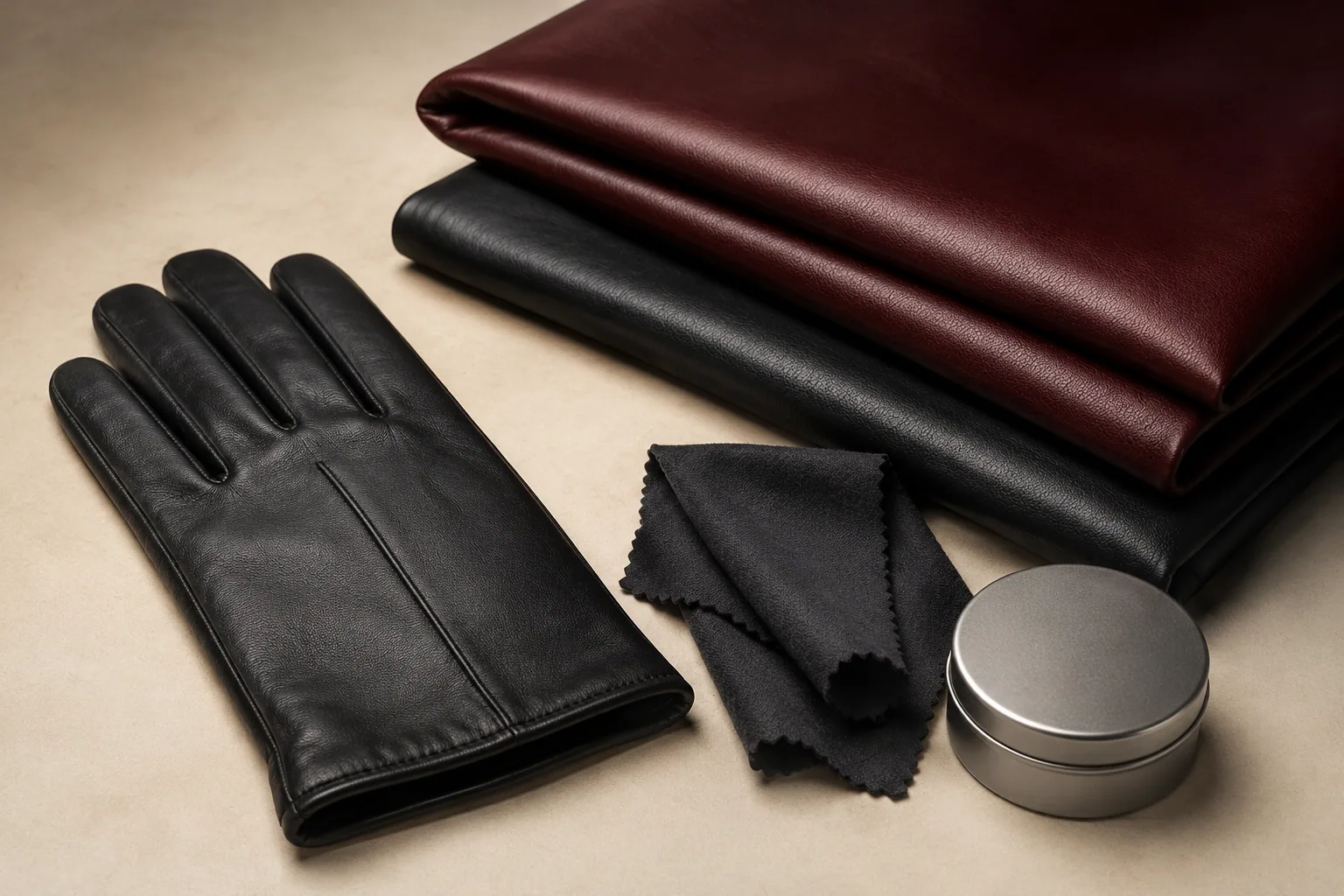
Leather-focused objects may include jackets, trousers, skirts, gloves, boots, belts, caps, collars, cuffs, patches, pins, luggage or craft samples. Grain, stiffness, warmth, creak, polish, scent and the way a surface changes with wear may be more important than any particular garment shape.
A patch, colour, club vest or carefully maintained boots may carry personal or community meaning, but symbols are contextual and local. No outsider should infer membership, authority, sexual availability or preferred role from clothing. Borrowing or photographing significant items also requires the owner's permission.
Fashion, craft and alternatives
Leather has moved repeatedly between workwear, uniform, subculture and high fashion. The V&A's account of Vivienne Westwood, for example, documents how British punk and fetish-wear references entered influential fashion design. That history helps explain visual overlap without turning every leather garment into fetish wear.
People may choose animal leather, vintage material, synthetic leather-look textiles or newer plant-based alternatives for sensory, ethical, cost or practical reasons. These materials differ in durability, breathability, finish and care. Accurate product labels and maker instructions are more reliable than assuming that every 'vegan leather' or glossy black surface behaves alike.
Consent and clinical distinction
Leather clothing can support role-play or power exchange, but a garment never grants permission to touch its wearer or interpret a private symbol. Scent and shared garments also raise individual questions about allergies, hygiene and boundaries that should be discussed rather than presumed.
WHO guidance distinguishes consensual adult interests from paraphilic disorders by considering distress, impairment, serious risk and non-consent. A leather collection, club identity, fashion preference or craft practice is not diagnostic evidence, and stigma alone should not be mistaken for intrinsic pathology.
Non-graphic examples
What the umbrella may include
- Collecting leather swatches for grain, scent, patina or craft quality.
- Wearing a jacket or boots as everyday fashion without a fetish meaning.
- Using leather gloves or a collar as an agreed adult role cue.
- Preserving a patch or pin because of its personal or community history.
- Choosing a leather-look alternative for ethical, sensory or practical reasons.
Reviewed 30 August 2026
Keep exploring.
This detailed field note uses the best available evidence without treating one community sample as universal. Evidence limits and UK context are stated where relevant.
Prepared by The UK Kink Guide editorial team. Read the evidence and review methodology.
Found an error or important omission? See how to report a correction.
Explore all 268 entries