Sensation or sound may be the focus, but consent and physical risk still require attention.
Back to the glossarySensation & activity
Impact play
A broad term for consensual striking used to create sound, rhythm, sensation or power exchange. Tools and intensity vary widely, and apparently similar activities can carry very different injury risks.
Sensation & activity
In brief
A familiar label can conceal very different intensities and risks.
Impact play is a broad adult term for negotiated striking used for sensation, sound, rhythm, ritual or power exchange. It covers activities with very different physical and emotional effects, so a shared label is not evidence that two people mean the same thing. This page explains terminology, consent and recognised risks without teaching anatomy, equipment use or technique.
Greater force may increase the chance of bruising or more serious injury; this page gives no technique guidance.
A sound, gesture or prop may carry ritual meaning without significant physical contact.
Unwanted striking, ignored withdrawal or violence outside the agreed scope is not impact play.
What the evidence covers
Rehor's community survey records a wide range of adult kink behaviours, while reviews by Dunkley and Brotto and by Wuyts and Morrens place consent and context at the centre of interpretation. These studies do not establish that a named practice is safe or beneficial for every participant.
Drouin and colleagues' survey of BDSM-related injuries shows that injuries do occur in community samples. Self-reported survey data cannot supply a universal risk rate or validate a particular technique, but it contradicts the idea that experience or consent removes physical risk.
Objects, sound and symbolism
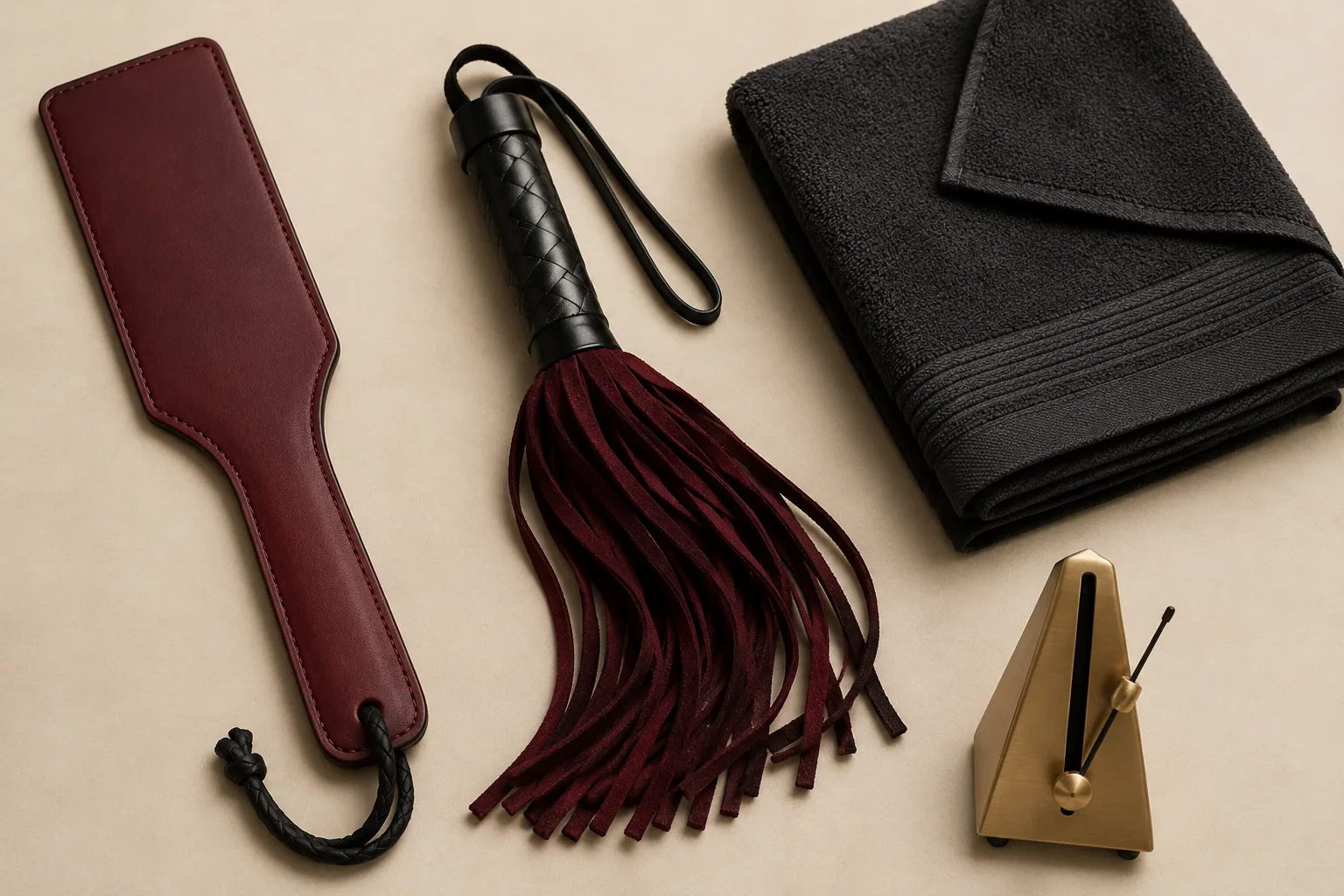
Associated objects may include an unoccupied paddle, crop-like prop, percussion-style item, protective clothing, timer, boundary card or aftercare object. Material, weight, flexibility and condition affect what an object does, so visual similarity does not make items equivalent.
For some adults, sound, anticipation, counting, costume or a repeated ritual matters more than pain. Objects can also represent discipline or status. None of those meanings authorises contact, and owning equipment is not evidence of competence or consent.
Consent, communication and injury
Agreement needs to cover the actual activity, intensity, marks, health considerations and ways to stop. A safeword supplements ordinary language and observation; silence, freezing, dissociation or inability to respond cannot be treated as permission.
NHS first-aid guidance is appropriate when there is injury, and urgent symptoms require professional help. Aftercare may support comfort but cannot reverse tissue injury or repair a consent violation.
Clinical and UK legal boundaries
Consensual adult impact interest is not a paraphilic disorder by default. WHO guidance separates atypical interests from disorders by considering distress, impairment, serious risk and non-consent.
UK law does not make all injury lawful merely because adults agreed. In England and Wales, section 71 of the Domestic Abuse Act 2021 limits consent as a defence to serious harm for sexual gratification. Other jurisdictions have their own law; a kink label never excuses assault or domestic abuse.
Non-graphic examples
What the umbrella may include
- Using an unoccupied prop as a symbolic object in a negotiated adult scene.
- Agreeing that sound and rhythm, rather than force, are the intended focus.
- Discussing visible marks and health concerns as separate consent questions.
- Stopping when words, behaviour or wellbeing indicate uncertainty.
- Seeking appropriate medical help rather than assuming aftercare is treatment.
Reviewed 30 August 2026
Keep exploring.
This detailed field note uses the best available evidence without treating one community sample as universal. Evidence limits and UK context are stated where relevant.
Prepared by The UK Kink Guide editorial team. Read the evidence and review methodology.
Found an error or important omission? See how to report a correction.
Explore all 268 entries